A short history of arguing with air
From riding behind trains to plastic triathlon superbikes, and the builders who kept it beautiful.
Monsoon Cycles, Colorado Springs · Updated August 21, 2026
Above about 30 km/h, most of what a cyclist fights is air. Riders figured this out long before engineers did. In 1899, Charles Murphy rode a mile in under a minute on boards laid between the rails, tucked behind a train, and got a nickname (Mile-a-Minute Murphy) and the proof: take away the wind and a human on two wheels is astonishingly fast.
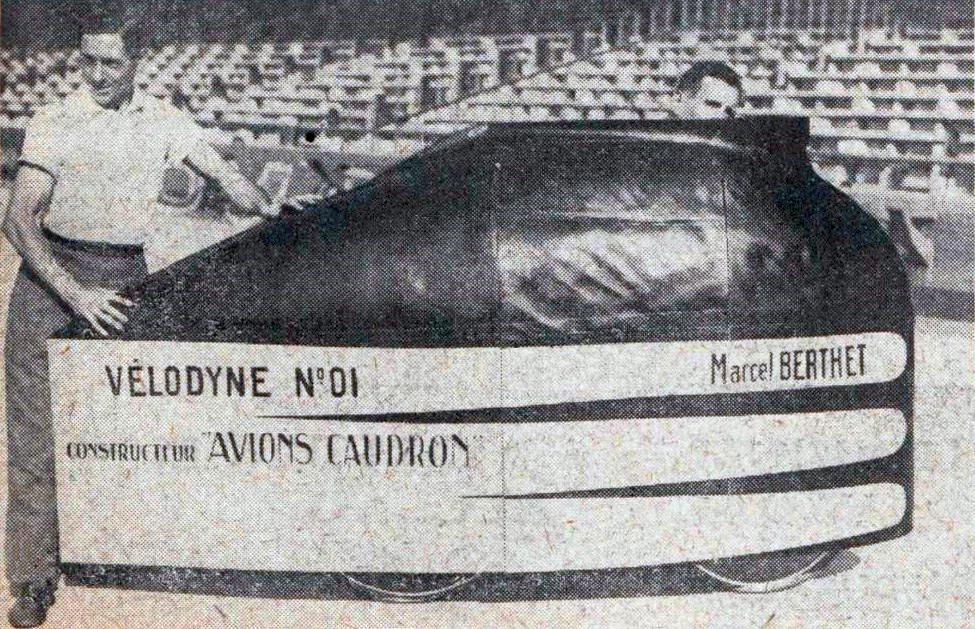
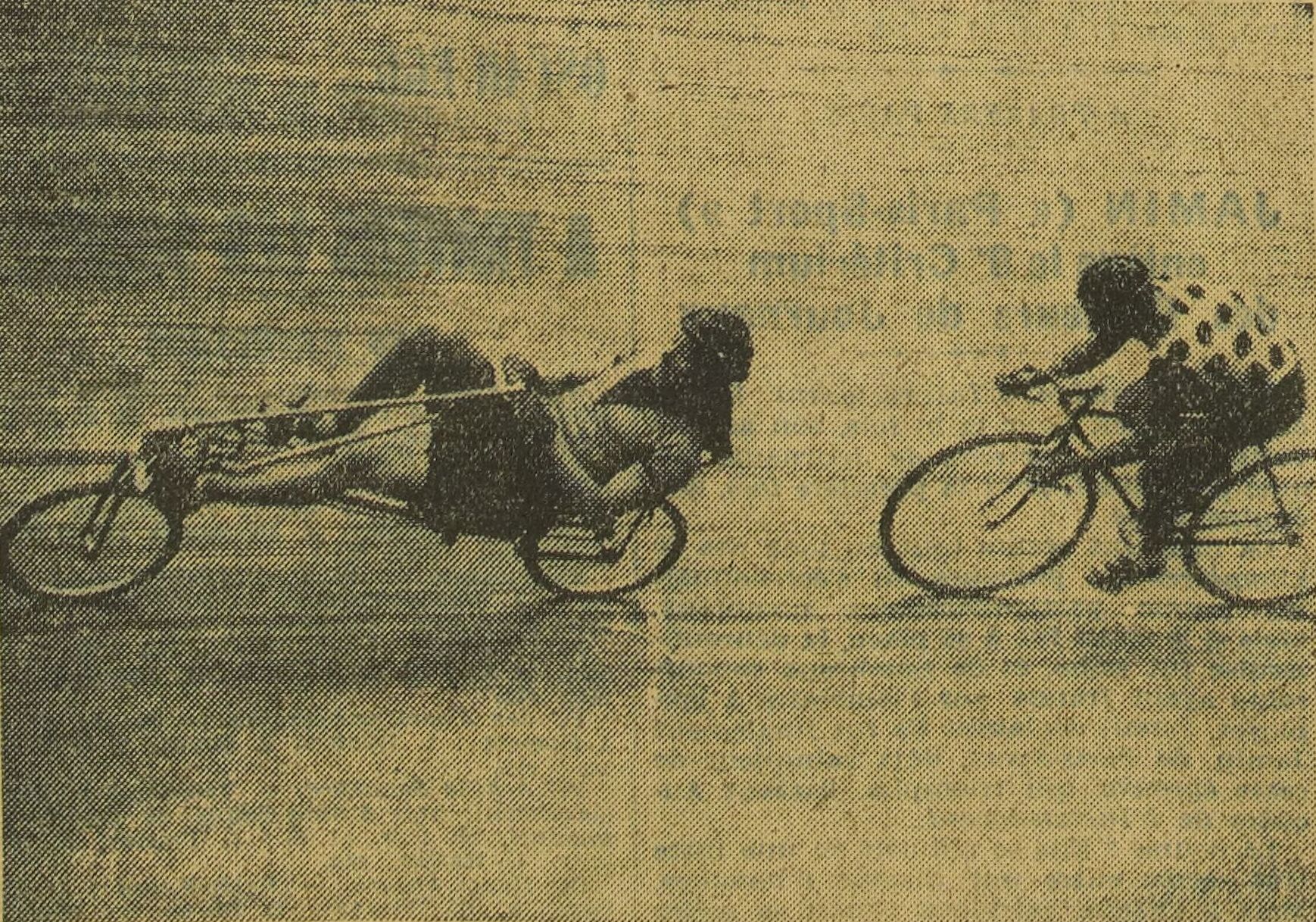
The first golden age came in the 1910s and 30s, and it was stranger than people remember. Marcel Berthet and Oscar Egg traded the hour record back and forth, then Berthet came back in 1933 inside the Velodyne, a full torpedo fairing, and went further than any upright rider of his era. The same year, Francis Faure took the hour record on Charles Mochet's Velocar recumbent. The UCI looked at all of this speed and made a decision that still shapes every bike you have ever bought: in 1934 it banned recumbents, then fairings, and drew a box around what counts as a bicycle. Speed outside the box did not die, it just left the sport; its descendants run at the human-powered-vehicle speed trials today, where faired machines have gone better than 140 km/h on flat road. On legs.
Inside the box, aero went underground for fifty years, because nobody had a wind tunnel to test ideas against. The seventies believed lighter was faster. Racers drilled holes in brake levers, chainrings, derailleur cages, and seatposts, and called it drillium. Eddy Merckx rode drilled components for his 1972 Hour record, and the magazines ran how-to articles. Nobody could say whether the holes cut the wind or caught it. By the eighties the answer was in: they caught it, and the practice faded.
Component makers were guessing too. In 1981 Shimano released Dura-Ace AX, the first groupset styled for aerodynamics: teardrop brake levers, smoothed profiles, and Dyna-Drive pedals that put the foot below the spindle through an oversized threaded hole. Shimano claimed a 20 percent drag reduction. The pedals had bearing problems, riders did not buy it, and AX is a collector's item now. The same idea came back a decade later with better testing behind it.
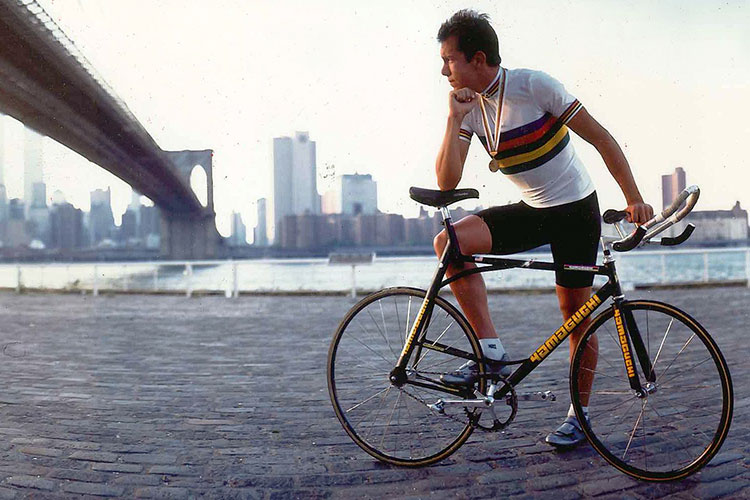
Then aero came back with instruments. Francesco Moser's 1984 hour record brought disc wheels and low-profile machines. The mid-80s Olympic funny bikes followed, small front wheels and cow-horn bars. Koichi Yamaguchi, who later taught me framebuilding, had been squishing aero profiles into round tubing by hand since the early 1970s, as framebuilder and mechanic for the Japanese Olympic teams. Starting in 1988 he did the same job for the US team, and he built every bike for the US Olympic squads in 1988 and 1992, not just the pursuit machines. For the 1988 Games, he (with help from his wife June) built close to 200 complete custom frames for the whole team in one month, one bike per rider per event. Then in 1989 Greg LeMond bolted triathlon bars onto his time trial bike and won the Tour de France by 8 seconds on the final stage. After that, nobody argued about whether air mattered.
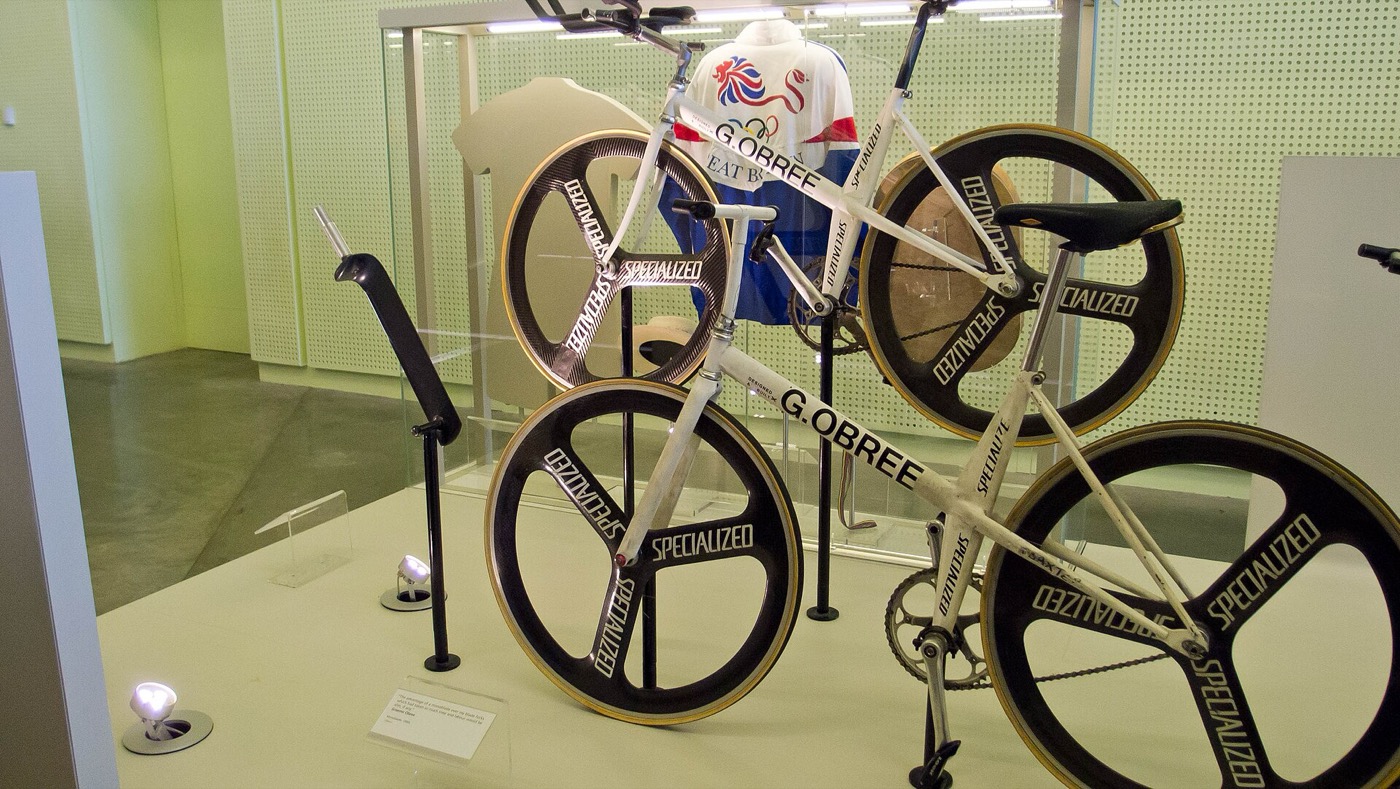
The 90s belonged to the beautiful lunatics. Graeme Obree built a bike with washing machine bearings, invented the tuck, got it banned, invented the superman, got that banned too. Chris Boardman rode Mike Burrows' Lotus 108, a carbon monocoque that looked like it arrived from a decade that has still not happened. The UCI answered with rules again around 2000: double-diamond frames only, 3-to-1 tube shapes, positions policed to the millimeter.
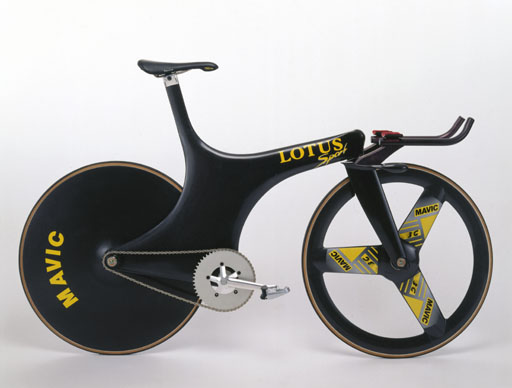
The same year the Lotus won in Barcelona, it lost in Valencia. At the 1992 professional world championships, Shaun Wallace rode the Lotus in the pursuit, and Mike McCarthy beat him on a frame Koichi built in three days, the week of the event. The Lotus was a long, million dollar project. Koichi painted McCarthy's bike flat black because that is the fastest-drying basic spray paint you can buy, and the paint still smelled wet on the start line.
So the unconstrained engineering went where the UCI does not reach: triathlon. Modern tri superbikes, storage boxes in the frame, no seat tube to speak of, are what bicycles look like when only the wind gets a vote. Aerodynamically they are magnificent. Whether they are bicycles you would want to look at over coffee is between you and your maker.
Which brings me to the part I care about. Aero is not a material and it is not a price point, it is a shape, and some of the best proof comes from steel. Rob English builds aero road and TT machines out of steel tubes that hold their own in any tunnel and happen to be gorgeous. Yamaguchi's handmade pursuit frames sat under world-class riders. The air does not care what your bike is made of, and beauty was never the thing slowing anybody down.
The frontier is moving to gravel. Air drag becomes the largest force on a rider at about 18 km/h, and gravel riders spend most of their time above that, so frames, wheels, and even frame bags are now designed in wind tunnels for gravel racing. I am working on it too. The Mullet Gravel preset in the Frame Lab is my gravel funny bike, and the next experiments are art deco fender fairings that double as partial wheel covers.
Design something slippery in the Frame Lab, or feel the draft yourself.